The 115th China National Sugar and Alcoholic Commodities Fair: Showcasing New Industry Trends and Building a Bridge for Production and Marketing Cooperation
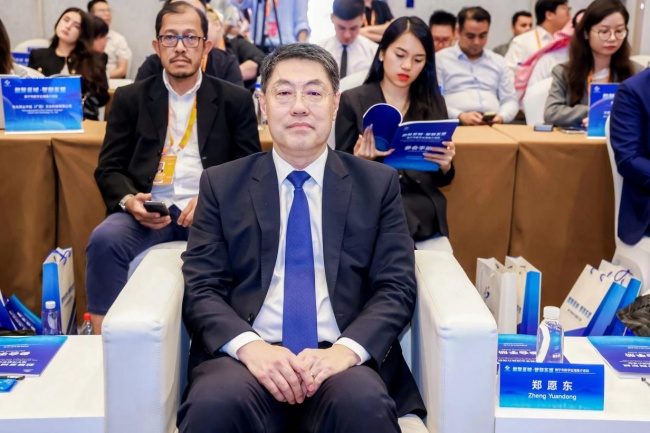
Amid fragrant osmanthus blossoms in Nanjing, the ancient capital, merchants from all over the world gather along the Yangtze River. Held from October 15 to 17 at the Nanjing International Expo Center, the 115th China National Sugar and Alcoholic Commodities Fair kicked off grandly. Under the theme of “An Autumn Sugar Fair, Sweetness for Both Sides”, the event attracted over 3,500 exhibitors from home and abroad, bringing hundreds of thousands of products to the show.
Covering a total exhibition area of approximately 180,000 square meters, the fair featured ten core exhibition zones and 16 special category pavilions, covering alcoholic beverages, snack foods, condiments, food raw materials and accessories, and other categories. It fully encompassed mainstream industry segments and innovative tracks.
The exhibition showcased cutting-edge achievements in the food and beverage sector and outlined new paths for its development, serving as a vital window to capture industry trends and seize market opportunities. Over the three days, more than 310,000 domestic and overseas distributors and channel purchasers held face-to-face negotiations with exhibitors. More than 20 special matchmaking events were held concurrently to smooth the channels for supply-demand docking.
Meanwhile, with exhibits as the medium and negotiations as the link, the 115th China National Sugar and Alcoholic Commodities Fair facilitated order placement, connected the domestic and international markets, and built an efficient and pragmatic commercial bridge for resource exchange and coordinated industrial development across the industry.
Striking Effect of the “Debut Economy”

New Products from Multiple Countries Compete on the Same Stage This sugar fair became a preferred platform for the concentrated launch of new products, technologies and business models. Global premium goods, domestic new releases and local specialties competed side by side.
In the international section, 12 countries took part in the fair for the first time: Pakistan, Iran, Sri Lanka and the five Central Asian countries in Asia; Belarus and Slovakia in Europe; Ethiopia in Africa; and the Dominican Republic in the Americas. A batch of overseas new products made their debut in China.
At the supporting “Export to China” Sugar and Alcohol Industry Matchmaking Conference, 512 imported food, beverage and liquor products were showcased, among which 56 items premiered in China and stood out as star products at the event. On the domestic front, nine regions including Henan, Hainan, Xining, Wuxi, Suihua, Shangrao, Xishui, Panzhou and Dingbian organized exhibition delegations for the first time.
Dozens of new products made their first appearance. COFCO brought hundreds of high-quality products under its subsidiaries. Guangzhou Baiyunshan Pharmaceutical launched the Yishenqing beverage to help relieve dampness in the body. Jasmine butter hot pot base boasts rich aroma; cinnamon coconut caramel cookies deliver a distinctive flavor; and newly launched chocolate cakes feature mellow sweetness. Such innovative flavors drew numerous purchasers to sample and inquire.
Merchants tasted products while negotiating, lingering at booths. Many visitors shifted from casual passers-by to inquirers, and eventually sat down for in-depth talks.
The “debut economy” delivered remarkable results at this fair. Global goods, domestic innovations and local specialties were on full display. The debut economy was tangible, experiential and deal-making here, turning first exhibitions into premieres, premieres into official launches, and launches into top market choices.
Online and Offline Integrated Supply-Demand Matching

Boosting Efficient Commercial Transactions As a key platform connecting food enterprises with distributors nationwide, the sugar fair also serves as a channel for brands to expand offline markets and seek incremental sales channels. Online communication can never replace the intuitive experience of on-site product tasting, nor replicate the authenticity and depth of face-to-face negotiations. The China National Sugar and Alcoholic Commodities Fair creates exactly such an industrial docking platform, turning simple viewing and sampling into tangible commercial orders. Merchants verify products on site, taste flavors, and discuss product details and cooperation models in person. Genuine communication shortens the distance between suppliers and buyers, helping enterprises acquire clients and close deals, continuously energizing the market and driving efficient commercial activities in the food and beverage industry.
The exhibition halls were packed with visitors. Many booths offered free food and drink samples, and some exhibitors even set up cooking stations on site. The pavilions were filled with enticing aromas, featuring sampling activities, tastings and interactive games. Many purchasers and citizens came especially for the fair, joking that they “arrived on an empty stomach and left fully stuffed”.
While offline exhibition halls acted as physical venues for face-to-face talks and product tasting, online live streaming rooms broke the physical boundaries of the fair and created a channel for “cloud exhibition tours”. Douyin and Kuaishou officially joined the fair and set up exclusive booths in the venue. Many well-known brands went live using the exhibition site as a real-life backdrop, introducing new products, conducting sample tastings and promoting business cooperation to online audiences. The integration of online and offline activities amplified the fair’s influence and opened up new all-channel marketing paths for food and beverage brands. Content creators flocked to the venue to shoot live reviews, wandering among booths to taste new products in an immersive way and share premium goods and the bustling fair scene with their online followers in real time. The diverse exhibits and lively tasting atmosphere provided rich materials for creators, and online content continued to spread, further expanding the reach of the sugar fair.
A nut and roasted food supplier who has attended ten consecutive sugar fairs stated that leveraging the strong industry appeal of the event, the enterprise greatly improved the efficiency of national investment promotion. The booth saw heavy foot traffic; within just one morning, the company received over 60 cooperation intentions and signed contracts with several clients on the spot. According to the supplier, the snack food sector has maintained growth in recent years. With the sugar fair as an industrial platform, the enterprise has extended its sales channels across the country and even to global markets.
Beyond exhibitions by vendors and on-site negotiations and orders from professional buyers, the 115th China National Sugar and Alcoholic Commodities Fair gave full play to its role as a platform for idea exchange and production-marketing docking, hosting a wide range of professional events.
More than 20 activities were held back-to-back, including the Food and Beverage Industry Development Summit of the 115th China National Sugar and Alcoholic Commodities Fair, the “Hundreds of Counties, Thousands of Products, Tens of Thousands of Families” Special Promotion Conference, the 2026 Trendy Liquor Promotion Conference, the “Export to China” Sugar and Alcohol Industry Matchmaking Conference, the “Innovative Technology, Food Connecting the World” Online Export Resource Matching Conference, the Food Technology Achievement Exchange Conference, the Green Agriculture Special Supply and Procurement Matchmaking Conference, the 3rd Private Domain New Channel Product Selection Summit, the 4th Sugar and Alcohol Masters Competition, and the Summary Conference of the Hundred Cities and Ten Thousand Stores Golden Autumn Fine Wine Consumption Season. These events built precise and effective supply-procurement docking platforms, helping industry players better understand China’s consumer market and industry trends and promoting negotiations and cooperation among upstream and downstream enterprises.
The person in charge of an organic grain producer remarked that as a grand industrial event in the food and beverage sector, the China National Sugar and Alcoholic Commodities Fair exerts extensive and far-reaching influence in the industry. The platform provides strong support for manufacturers and brands, enabling precise supply-demand matching and efficient client referrals through resource advantages, effectively helping enterprises expand markets and tap cooperation opportunities. The official said the company reaped abundant gains from participation and will keep joining the sugar fair to deepen its industry presence and explore markets via this platform.
Seizing Opportunities under the “Export to China” Initiative

International Merchants Share the Vast Chinese Market The sugar fair functions both as a showcase for global delicacies and a golden bridge for trade cooperation. For the first time, this edition was included in the annual event list of the Ministry of Commerce’s “Export to China” initiative, with a dedicated “Export to China” exhibition zone and a supporting industry matchmaking conference.
In the “Export to China” zone, global premium goods entered the Chinese market, linking “China’s sweetness” with “the world’s sweetness”. A Russian exhibitor shared that his company has participated in the China National Sugar and Alcoholic Commodities Fair ten times. It ranks among their largest and most important trade fairs, as they always find new partners here. On the first day of the fair, the booth received more than 500 visitors and secured 10 to 15 contracts.
The “Export to China” Sugar and Alcohol Industry Matchmaking Conference adopted approaches including pre-event two-way matching, market trend releases and on-site presentations and negotiations. It created an efficient, pragmatic and precise communication and cooperation platform to connect high-quality overseas supplies with Chinese purchasing demands face to face and point to point, facilitating the implementation of more cooperation intentions. Overseas brands and agents brought their products to the venue to seize opportunities and tap the potential of China’s consumer market. Professional Chinese purchasers came with clear procurement needs to explore imported goods and open up international cooperation channels.
An exhibitor from the Malaysian delegation commented that the industry matchmaking conference was highly professional and well-organized by the host, offering one-on-one matching services. This model helped them connect with suitable and interested target partners and raised the likelihood of deals. The exhibitor has met several potential partners at the conference and looks forward to further progress and in-depth cooperation with Chinese counterparts.
Capturing Consumer Trends and Identifying Industry Opportunities

From new product debuts and the concentrated breakout of booming tracks to the coordinated development of the whole industrial chain, the sugar fair has long served as a key window to observe the future direction of the industry.
This edition revealed several market signals. The food and beverage industry is undergoing profound transformation driven by technology: digitalization reshapes production and supply chains, nutritional science redefines product value, and consumer trends steer industrial development.
Emotional consumption is rising rapidly. Consumers are increasingly willing to pay for things they “like”, that make them “feel good”, for fun experiences and recognized concepts. Market competition has evolved from product rivalry into comprehensive competition centered on scenarios, emotions and intellectual property (IP), pursuing win-win outcomes between brands and consumers. A pharmaceutical enterprise launched IP co-branded tea drinks themed on Empresses in the Palace and Strange Tales of the Tang Dynasty. Empowering products with cultural IP and activating new consumption through new scenarios, the initiative achieves shared benefits for consumers, brands and the industrial side.
Fresh snacks stand out as a relatively certain development trend in the retail industry in 2026. To help industry players seize opportunities in this track, a special Fresh Snack Zone was set up at the fair. The zone brought together food manufacturers, functional raw material suppliers, packaging supporting enterprises and snack channel operators, fully demonstrating the whole industrial ecosystem of fresh snacks covering R&D, production, packaging, preservation and circulation. It built an efficient platform for upstream and downstream docking to boost the coordinated development of the fresh snack industry. Driven by this trend, fresh snacks featuring simple ingredients and short shelf lives have gained rapid popularity. Many exhibits combine multiple attributes: fresh snack features, medicinal and edible ingredients, low GI values and clean labels. Products such as donkey-hide gelatin and red bean toast, whole wheat chia seed bread, and mulberry and polygonatum baked goods were well received by purchasers.
The “clean label” concept also emerged as a major trend reflected by exhibits. The idea of simplifying ingredient lists and cutting unnecessary chemical additives is gaining recognition among a growing number of consumers. When choosing food, customers first check ingredient lists. Concise or nourishing ingredient lists have become an important reference for food purchases.
“Flavor innovation” remains a permanent hot topic at food exhibitions. A host of cross-flavor new products debuted at the fair, including cranberry hawthorn fruit wine, pineapple meat strips, coriander beef crackers, honey mustard shrimp-flavored chickpeas and fresh fruit rice wine juice. These innovative items made breakthroughs in taste, packaging and product categories, balancing great flavor and health benefits.
Keeping pace with new consumption trends of youthfulness and light socializing, the alcoholic beverage sector has rolled out more innovations. As Generation Z becomes a major consumer force, young buyers favor good-looking products, enjoy trying novel flavors and seek emotional resonance. Drinking is shifting from traditional entertaining social events to self-pampering experiences. “Light intoxication” is gradually replacing heavy drinking. Drinking at home, small gatherings with friends and pairing alcohol with late-night snacks have become high-frequency consumption scenarios for alcoholic drinks. Zero-fat and zero-calorie beverages such as sparkling Americano and lime mojito also offer diverse light consumption options for young people.

Yanghe presented its innovative offerings targeting young consumers. New products including “Little Mianyang” and Yingxia showcased at the fair precisely cater to light consumption scenarios such as small get-togethers and late-night snacks. Integrating the profound heritage of Baijiu with youthful innovation, they won favor among young consumers.
During the fair, the “Personality Tavern” pop-up event co-launched by the China National Sugar and Alcoholic Commodities Fair, Guangliang Liquor and Good Wine Geography Bureau drew long queues of young visitors. Attendees could DIY mixed drinks according to their exclusive “drinking personality ID cards”, gaining a strong sense of identity and participation.
At the main forum of the 115th China National Sugar and Alcoholic Commodities Fair, Zuo Chenming, Deputy Director of the Research Center and Director of the Rural Revitalization Research Center at Alibaba Tmall Group, analyzed six major consumption trends in the food and beverage industry based on platform data: low GI healthy staple foods, dietary supplements and wellness products, silver nutrition economy, minimally processed foods retaining original qualities, endorphin healing food, and local flavors from small towns with distinctive geographical features. He put forward four suggestions for food and beverage enterprises: seize opportunities brought by Generation Z and shrinking family sizes, make good use of platform data and AI tools, attach importance to live-stream e-commerce channels, and promote AI application in cost reduction, efficiency improvement and consumer-side operations.
Implementing the Healthy China Initiative

“Medicinal and Edible Ingredients” Enter Daily Life With the in-depth implementation of the Healthy China 2030 Plan Outline, public health awareness has improved markedly. The fair listed “Healthy China” as one of its three core priorities, showcasing innovative achievements focusing on medicinal and edible ingredients, low GI foods, special dietary foods and health-preserving liquor. Nearly 600 enterprises related to nutrition and health took part.
In the Healthy Food and Technology Service Zone, a diverse lineup of exhibitors displayed full-industry-chain innovations ranging from healthy raw materials and functional foods to health technology services. Exhibits covered four categories: low GI foods, medicinal and edible ingredients plus local characteristic cultural foods, functional foods, and AI health services and health management. The zone demonstrated the vitality of the healthy food industry spanning raw materials to end products, from traditional practices to modern technologies.
The medicinal and edible ingredient sector has shifted from traditional empirical applications to modern scientific empowerment, becoming an important driver of health consumption upgrading. Traditional herbal raw materials, once mostly found in pharmacies and specialty stores, have entered people’s daily consumption in forms such as health wine, snacks, beverages and grain products, leading the new trend of Chinese-style wellness. Relying on high-quality raw material reserves, complete scientific research systems and strict whole-process quality control, Dong’e Ejiao entered the health-preserving liquor track. It brought Ejiao liquor and Cistanche health liquor to the sugar fair, catering to different consumer groups and scenarios. The brand transformed ancient recipes of Ejiao and Cistanche infused in liquor into modern ready-to-drink products to tap new growth in the health liquor market, winning enthusiastic responses from liquor purchasers.
Besides, low GI nine-black quinoa grain biscuits, astragalus and Chinese yam soybean milk powder, purple rice and mulberry sachima, chrysanthemum, wolfberry, cassia seed and wild jujube strips and other food and drink products featuring medicinal and edible ingredients were unveiled. Medicinal and edible substances such as codonopsis, astragalus, dried tangerine peel, wolfberry, lotus seed, cassia seed and monk fruit were widely adopted. The medicinal and edible ingredient track is trending toward modernization, youthfulness, fashion and everyday use.
Expanding Segmented Consumption and Accelerating Channel Integration and Iteration

Against the backdrop of profound adjustments in the global economic landscape and continuous upgrading of consumer demand, the food and beverage industry is embracing historic opportunities driven by technology, channel transformation and brand reshaping.
At the Food and Beverage Industry Development Summit, the main forum of the 115th China National Sugar and Alcoholic Commodities Fair, Xu Sitao, an independent economist and Senior Advisor at Centennial Asia, stated that snacks have become the “fourth meal” in the food and beverage industry, featuring counter-cyclical rigid spending. Requirements for food ingredient labeling and supermarket display standards keep rising, and private brands hold greater development potential in China.
Channels are permeating one another, evolving from simple “trading” to part of “lifestyle”, exploring unique value and reshaping their roles. At the “Export to China” Sugar and Alcohol Industry Matchmaking Conference, Luo Qi, Vice President of Nielsen IQ China, analyzed the market: In traditional offline channels, large formats are exploring value reconstruction to become one-stop marketplaces worth visiting for experiences; small formats offer convenience and companionship to build their “offline moat”. Among emerging offline channels, snack stores are shifting gears from attracting customers with low-price specialties to developing segmented scenarios; membership stores select high-quality products for middle-income groups. Growth opportunities for imported foods are expanding from core cities to broader markets.
Channels are undergoing differentiation while consumption keeps expanding. Emerging offline channels represented by snack wholesale stores are developing rapidly, creating broader and more efficient consumer touchpoints for brands. County economies are growing steadily, and their large population base together with rising quality demands release new consumption potential. However, county markets are not uniform. Brands need to identify different market types and adopt differentiated strategies by adapting products and channels to local consumers.
The food and beverage industry is closely linked to national economy and people’s livelihood. As a key pillar of consumer goods industry, it guarantees food supply and meets people’s aspirations for a better life. In advancing high-quality development, it plays an indispensable role in expanding domestic demand, boosting consumption, creating jobs, empowering rural revitalization and building a robust domestic market.
The 115th China National Sugar and Alcoholic Commodities Fair integrated its development into national strategies, serving the new development pattern featuring domestic circulation as the mainstay and dual domestic and international circulation reinforcing each other. Committed to building an efficient and coordinated docking platform to smooth industrial and market circulation, it enables merchants at home and abroad to share the vast opportunities of China’s market.
The 115th China National Sugar and Alcoholic Commodities Fair has concluded successfully, yet industrial innovation and upgrading continue, and cooperation momentum remains strong. The “sweetness on both sides” brought by this autumn sugar fair is turning into continuous new orders, new partners and new opportunities.
The 116th China National Sugar and Alcoholic Commodities Fair will be held in Chengdu from March 25 to 27 next year. Let us carry the fruitful gains and eager expectations from this grand event, meet in the flower-blooming land of abundance in spring, embrace another sweet gathering, and jointly embark on a new journey for the food and beverage industry. See you in Chengdu!